


Sardinian wines
Sardinian wines: granite, wind and sea in the glass
Cannonau, Vermentino, orange wine and Pet Nat. Fermented in steel, without corrections, where the land ends and the sea begins. This is the guide to understanding them — and choosing them.
What makes a wine truly Sardinian
The starting point
Bottling in Sardinia isn't enough. A Sardinian wine comes from three things that exist together here and nowhere else: native grapes — Cannonau, Vermentino, Nuragus —, granite soils and a climate of strong sun and constant wind off the sea.
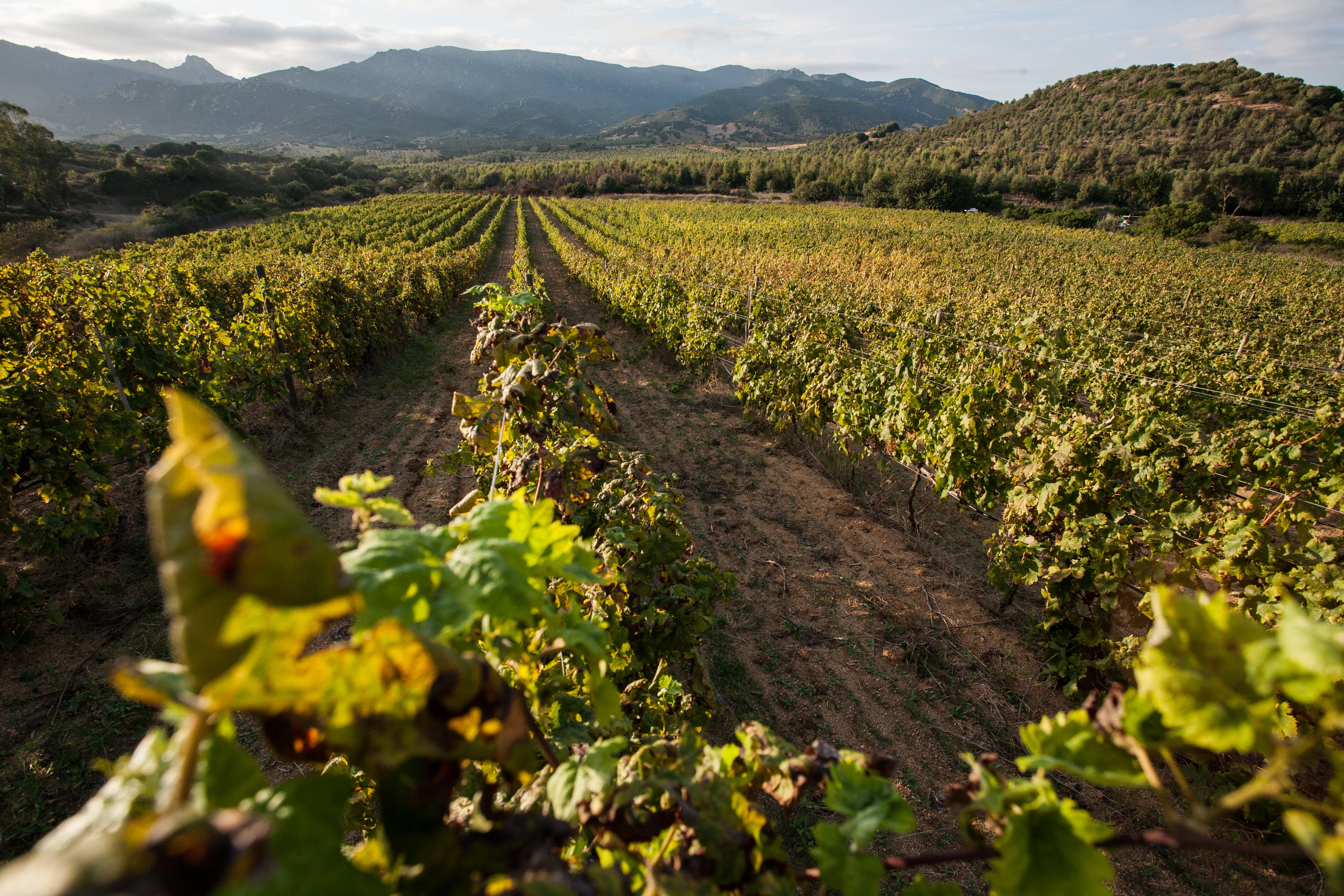
In Villasimius, at the southern tip of the island, the mistral runs through the rows, dries the leaves after rain and carries the salt of the sea, which settles on the grapes. That's the saline thread you find in the glass — and no production rulebook can invent it. Our vineyards are a stone's throw from Capo Carbonara and some of the most beautiful beaches in Europe: the same breeze you feel on your skin ends up in the wine.
Our way of making wine. Fermentation in steel, so as not to lose anything the land has built. Organic viticulture. No chemical correctives, nothing masked. Some wines we don't even filter. What happened in the vineyard is what you find in the glass.
Cannonau di Sardegna
The island's great red
Cannonau is the wine Sardinia uses to tell its story to the world. A warm, spicy, generous red: it's the most widely planted grape on the island and the symbol of its table. It thrives where other grapes struggle, between strong sun and wind, and gives wines that taste of earth and sun.

Brennas — Cannonau di Sardegna DOC
Deep red, garnet with ruby tints. It comes from the organic vineyards of Villasimius, fermented in steel, unfiltered and with no chemical additions. On the nose, ripe dark fruit — strawberry, cherry, plum — then black pepper and a hint of liquorice. On the palate it's generous, with soft tannins and a fresh acidity that gives it lift: easy to drink, but with character.
- 100% Cannonau
- Organic viticulture
- Steel, unfiltered
- 14% ABV
- No added sulphites
Vermentino di Sardegna
The white of the sea
If Cannonau is the land, Vermentino is the sea. It's Sardinia's great white: fresh, savoury, mineral, with the saline drive that makes it recognisable. In Villasimius it finds a microclimate of strong sunlight and constant ventilation — ideal conditions for a white you never tire of.

Entu — Vermentino di Sardegna DOC
Entu takes its name from the wind — the same mistral that carries sea salt onto the grapes. Straw yellow with golden tints, clean aromas of citrus, white flowers and Mediterranean scrub, with a saline thread that recalls the breeze at Capo Carbonara. On the palate it's savoury and mineral, with a fresh acidity that gives rhythm to each sip. Made entirely in steel: no wood, nothing masked.
- 100% Vermentino
- Granite soils
- Stainless steel
- Savoury, mineral
Orange wine and ancestral-method wines
Where Sardinian tradition meets experimentation
Before anyone invented white wine, this is how it was made: skins in contact with the juice. Orange wine takes up that ancient gesture and brings it to today's glass — amber, structured wines that reveal themselves slowly. It's our space to experiment without disrespecting the land.

C'Alma — Sardinian Orange Wine
From Vermentino and Nuragus grapes from Villasimius, partly organic. 20–25 days of skin maceration, then 5–6 months in oak barrels. Deep amber, a generous nose of ripe fruit, dried apricot and spicy notes with a touch of smoke. On the palate it's savoury and dense, with a long finish of vanilla, caramel and a hint of cardamom. A wine to drink slowly.
- Vermentino & Nuragus
- 20–25 days' maceration
- Aged in oak
- No additives

Zankitai — Pet Nat Orange
Pétillant Naturel is the oldest sparkling-wine method there is: the second fermentation happens in the bottle, with native yeasts, before the first fermentation has finished. From organic Villasimius grapes, with skin maceration. Amber with orange tints, fine and persistent bubbles, aromas of ripe citrus and candied orange peel. Dry, fresh, with a savoury finish. No added sulphites, no filtration.
- Ancestral method
- Organic grapes
- Unfiltered
- No added sulphites
How our wines are made
A few rules, applied seriously
Organic viticulture. The grapes grow without synthetic chemicals, in a microclimate that does much of the work: sun, wind, the temperature swing between day and night.
Fermentation in steel. For the whites and for Cannonau we choose stainless steel: it preserves minerality and aromatic freshness without interference. We use wood only where it's really needed, as for ageing C'Alma.
No corrections. No chemical correctives, no artificial preservatives. Several wines are unfiltered and have no added sulphites. It's a choice that takes risks, not an easy one: the wine stays alive and changes over time, as it should.
All of this comes from Mario's vineyards, between the granite and the wind of Villasimius. Wine isn't an industrial product: it's a harvest that changes every year. That's why each vintage is slightly different from the last — and that's how it should be.
How to pair Sardinian wines at the table
A quick guide
| Wine | Goes well with | Serving |
|---|---|---|
|
Cannonau Brennas |
Aged cheeses, game, porceddu, traditional Sardinian meat dishes | 16-18°C |
|
Vermentino Entu |
Seafood starters, raw fish, spaghetti with clams, mixed fried fish, fresh sheep's cheeses | 8-10°C |
|
Orange C'Alma |
Blue cheeses, lamb with myrtle, bottarga, grilled fish, shellfish. Also a wine for slow sipping on its own | 12-14°C |
|
Pet Nat Zankitai |
Seafood starters, bottarga, fresh cheeses, spicy food. Excellent on its own as an aperitivo too | 8-10°C |
The unwritten rule: drink the white and the Pet Nat looking at the sea, Cannonau when the sun goes down, and the orange when you have time and good company.
How to choose (and where to start)
Three routes, depending on what you're after
Trying us for the first time
Start with a tasting box: three wines, three characters, one common thread. The easiest way to find out which side you're on.
See the boxes →You want the whole range
Reds, whites, orange and Pet Nat on a single page. Choose the bottle — or the six-pack — you prefer.
Browse the wines →You want to make it a habit
With the Wine Club our wines arrive at your home twice a year, chosen directly by Mario. Three tiers, and a place among the first to discover new releases.
Discover the Wine Club →Frequently asked questions about Sardinian wines
What people ask us most often
What makes a wine "Sardinian"?
It isn't just geography. What counts is native grapes — Cannonau, Vermentino, Nuragus —, granite soils and a climate of strong sun and constant wind off the sea. In Villasimius the mistral dries the leaves and carries sea salt onto the grapes: that's the saltiness you find in the glass.
What's the difference between Cannonau and Vermentino?
Cannonau is Sardinia's great red: warm, spicy, for meat and aged cheeses. Vermentino is the island's white: fresh, savoury, mineral, for fish and aperitivo. They are the two poles of Sardinian winemaking.
What is a Sardinian orange wine?
It's a white wine made like a red: the skins stay in contact with the juice for weeks. The result is amber, structured and more complex than a classic white. Our C'Alma is made from Vermentino and Nuragus with 20–25 days of maceration and ageing in oak.
Do your wines contain added sulphites?
Brennas Cannonau and Zankitai Pet Nat have no added sulphites and no artificial preservatives. All our wines are made without chemical correctives, and some are not filtered.
What temperature should they be served at?
Cannonau at 16–18°C. Vermentino and Pet Nat chilled, 8–10°C. C'Alma orange at 12–14°C, so all its structure comes through without dulling the aromas.
Do you ship and do gifts?
Yes. You can order single bottles or six-packs, give a gift card valid across the whole shop, or a tasting box — wine and Villasimius honey, ready to ship.
Villasimius in the glass
Granite, wind and sea can't be explained: they have to be tasted. Choose your bottle, or let us guide you with a box.