


Sardinian honey
Sardinian honey: one bloom, one jar, one precise moment
Asphodel, strawberry tree, thistle, chestnut, eucalyptus. Single-flower honeys from the Mediterranean scrub of Villasimius — where the bees find on their own what nobody planted. This is the guide to recognising them and choosing them.
Why Villasimius honey is different
The starting point
Every single-flower honey comes from a flower that lasts a few weeks. Asphodel flowers in spring, strawberry tree in late autumn, thistle whenever it decides to. They aren't farmed: they grow on uncultivated pastures, along field edges, in the Mediterranean scrub of Villasimius. The bees find them on their own and produce for a limited time. That's why each jar tells the story of a precise moment in the season — and changes from one year to the next.
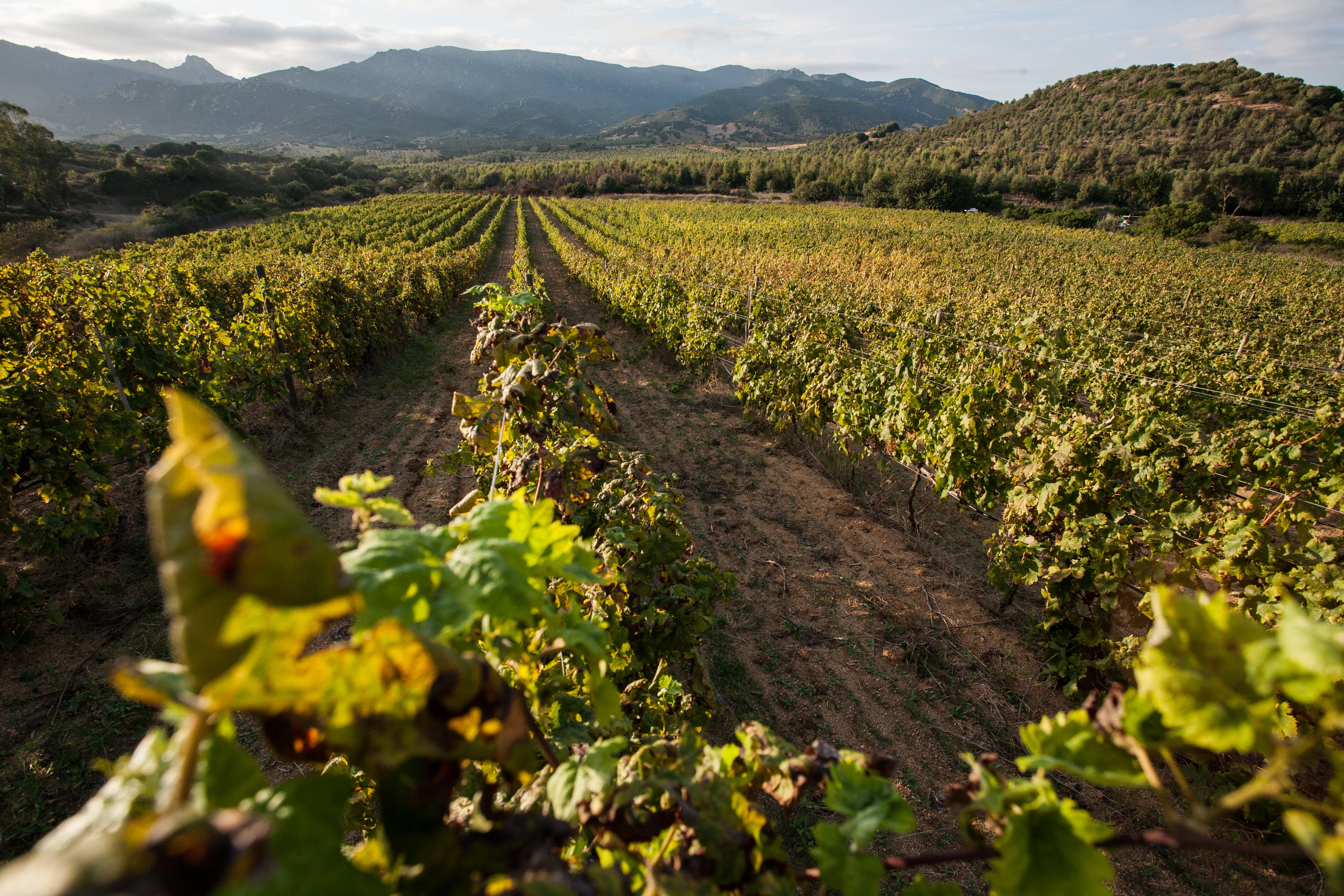
The hives stand in the same area where our vineyards grow, far from intensive farming. What the environment produces ends up in the jar without corrections.
How we work them. Single-flower honeys, with no additives or preservatives. Not pasteurised, not adjusted. 250 g jars. Crystallisation, when it comes, is natural: it's the signature of real honey.
The delicate honeys
Clean sweetness, to begin with
Light-coloured, creamy or runny, with floral aromas and no note that covers the rest. These are the honeys for breakfast, for fresh cheeses, for everyday use without thinking too much.

Asphodel Honey
Almost white, pearly, creamy with fine crystallisation. Asphodel flowers for a few weeks on the pastures and coasts of Villasimius: it isn't farmed, it arrives and passes. Delicate, floral, with a clean sweetness and no heavy notes. You notice it for what it doesn't have. Hard to find outside Sardinia.

Sulla Honey
Sweet, creamy, almost white. The wild sulla of Villasimius gives a delicate, immediate honey that's hard to stop eating. The honey to always keep in the cupboard, the one you can never go wrong with.

Citrus Honey
White, floral, slightly tangy. The nectar of Villasimius oranges, lemons and mandarins — bright, fresh, the honey to start with. Perfect in yogurt, on crêpes, in a herbal tea.

Wildflower Honey
The season changes, the flowers change, the flavour changes. Every jar is an extract of Sardinia at that exact moment. The most honest wildflower honey: it doesn't promise to be always the same, because the Mediterranean scrub never is.

Lavender Honey
Floral, elegant, with an aftertaste that lingers. The summer lavender of Villasimius, in the honey as in the scrub. Fragrant without being cloying — lovely just to smell.
The bold honeys
Character, for those looking for something with backbone
Amber, intense, often with a bitterish finish. They don't go with everything — and that isn't a flaw. These are the honeys for aged cheeses, to pair the way you'd pair a structured wine.

Strawberry Tree Honey
Bitter, astringent, lingering. The strawberry tree in Villasimius flowers only in late autumn, when almost everything else has stopped. Dark amber, with a bitter component you won't find in any other Italian honey. It isn't a flaw: it's the character of the strawberry tree, intact. People who taste it split in two — those who love it straight away and those who need to come back to it. They usually come back.

Chestnut Honey
Dark amber, lingering aroma, bitterish finish. The kind of honey you remember, not the kind you put in the cupboard and forget. The bees forage in the wild chestnut woods of Villasimius. We pair it with Brennas, our Cannonau, because they share the same structure: bold, with personality. On aged cheese it changes everything.

Eucalyptus Honey
Medium-dark amber, creamy, fine crystallisation. A balsamic, lingering aroma: on the palate it recalls the menthol sweets of childhood, then something deeper arrives, almost like dried mushrooms. It isn't a honey for everyone. It's for those who want something with backbone — on aged cheeses, on toast, in winter herbal teas.

Thistle Honey
Beige amber, floral and fruity with a slightly astringent aftertaste. It isn't as challenging as strawberry tree, nor as delicate as asphodel: it sits in the middle and works both ways. In Sardinia it goes with seadas, aranzadas and Carnival sweets, but it's also excellent on duck breast or at breakfast.
Crystallisation isn't a defect
What you need to know
Sooner or later every genuine honey crystallises: it's a natural process that depends on the balance of sugars, not on quality. In fact, a honey that stays runny forever has often been processed. The speed varies from flower to flower — asphodel and eucalyptus crystallise fine and creamy, others stay runny for longer.
If you prefer it runny, warm the jar in a water bath over a low heat, without going above 40°C: above that threshold aromas and properties are lost. Store at room temperature, away from heat and direct light.
How to pair honey
A quick guide
| Honey | Profile | Goes well with |
|---|---|---|
| Asphodel / Sulla | Delicate, creamy | Breakfast, ricotta, fresh cheeses, yogurt |
| Citrus / Wildflower | Fresh, floral | Crêpes, herbal teas, spoon desserts |
| Lavender | Fragrant, elegant | Tea, desserts, panna cotta |
| Thistle | Floral-fruity, astringent | Seadas, duck, pane carasau, mixed cheeses |
| Chestnut / Eucalyptus | Bold, bitterish/balsamic | Aged cheeses, Sardinian pecorino, toast |
| Strawberry tree | Bitter, lingering | Coffee, robiola, white chocolate mousse, melon |
The rule: the more aged the cheese, the bolder the honey can be. With sweet and fresh things, stick to the delicate ones.
How to choose (and where to start)
Three routes, depending on what you're after
First time
Start with a delicate one — sulla, citrus or wildflower. Clean sweetness, good on everything, zero risk. Then move up in character when you're ready.
Start with Sulla →You want character
Go for chestnut, strawberry tree or eucalyptus. Amber, intense, with a bitterish finish. The honey to pair like a structured wine.
Try Strawberry Tree →You want them all
Nine single-flower honeys in one collection. Compare, choose, or give a piece of Villasimius to someone who loves real things.
See all the honeys →Frequently asked questions about Sardinian honey
What people ask us most often
What does single-flower honey mean?
A single-flower (monofloral) honey comes mainly from the nectar of one flower: asphodel, strawberry tree, chestnut and so on. Each bloom lasts only a few weeks, so each honey tells the story of a precise moment in the Villasimius season.
Why does honey crystallise?
Crystallisation is natural and shows that a honey hasn't been processed: sooner or later every genuine honey crystallises. It isn't a defect. If you prefer it runny, warm the jar gently in a water bath, without going above 40°C.
Which is the rarest Sardinian honey?
Asphodel and strawberry tree are the hardest to produce: they flower for only a few weeks, asphodel in spring and strawberry tree in late autumn. They aren't farmed and yields are unpredictable, which is why availability is limited.
Where do I start if I don't know much about honey?
Start with a delicate honey such as sulla, citrus or wildflower for breakfast and fresh cheeses. If you want character, move on to chestnut, strawberry tree or eucalyptus: bold, with a bitterish finish, perfect on aged cheeses.
How should honey be stored?
At room temperature, away from heat and direct light. Honey doesn't go off like other foods: it keeps for a long time and holds on to its properties. Our jars are 250 g, with no additives or preservatives.
The Mediterranean scrub, in a spoonful
Every bloom passes quickly. Choose your honey — delicate or bold — or take them all and taste Villasimius season by season.